
A Hidden Climate Rhythm Is Driving Extreme Floods and Droughts Worldwide
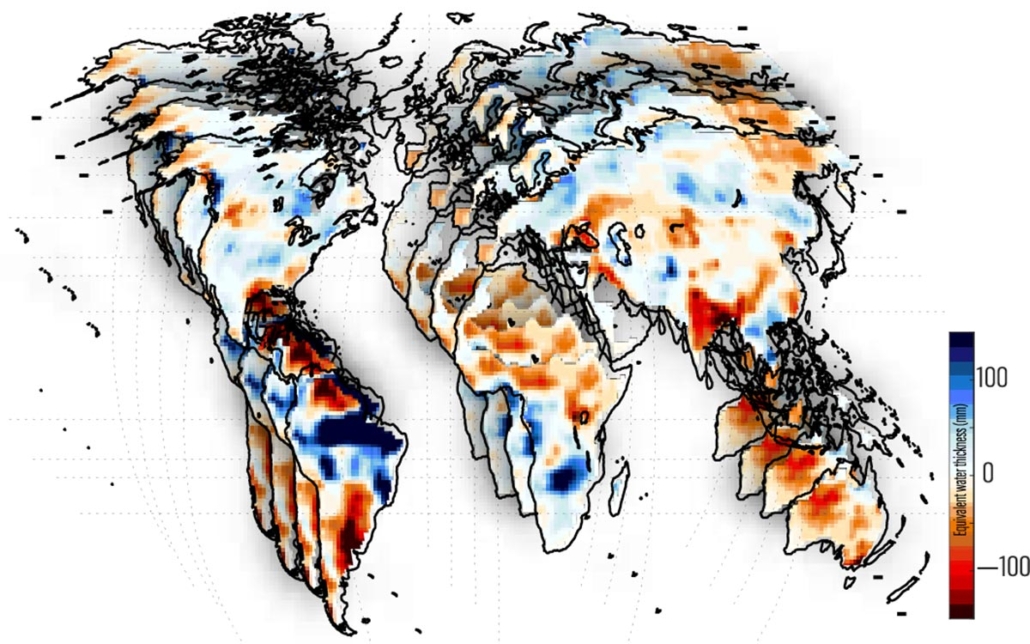
Scientists have identified a powerful but often overlooked global climate rhythm that is driving extreme floods and droughts across the world. Rather than happening randomly or independently, many of these severe water events are connected through a shared climate system centered in the Pacific Ocean. The research highlights how large-scale ocean patterns, especially the El Niño–Southern Oscillation (ENSO), are synchronising extreme wet and dry conditions across continents.
ENSO is one of the most influential climate cycles on Earth. It originates in the equatorial Pacific Ocean and shifts between two primary phases: El Niño, marked by unusually warm sea surface temperatures, and La Niña, characterised by cooler-than-average waters. These temperature swings alter atmospheric circulation patterns, which in turn reshape rainfall distribution, storm tracks, and temperature extremes around the globe. While ENSO’s regional impacts have long been known, scientists now show that it also coordinates water extremes across multiple continents at the same time.
The study, conducted by researchers at the University of Texas at Austin, analysed more than 20 years of satellite observations to track changes in global water storage. Instead of looking only at rainfall or river levels, the team examined “total water storage,” which includes surface water, soil moisture, snowpack, and groundwater combined. This broader approach provides a more complete picture of how water moves through Earth’s systems. To gather the data, scientists relied on measurements from NASA’s GRACE and GRACE-FO satellite missions. These satellites detect tiny changes in Earth’s gravitational field caused by shifts in water mass. When regions gain or lose significant amounts of water, the gravitational signal changes slightly, allowing researchers to track global water storage patterns with remarkable precision.
By defining extreme wet events as water storage levels in the top 10 percent historically, and extreme dry events as those in the bottom 10 percent, researchers were able to identify when and where severe conditions occurred. What they discovered was striking: extreme floods and droughts in distant regions often happened simultaneously during strong ENSO phases.
For example, El Niño events have been linked to severe drought conditions in parts of the Amazon basin and southern Africa, while at the same time increasing flood risks in other areas. Conversely, La Niña events have been associated with heavy rainfall and flooding in regions such as Australia and parts of South America, while contributing to drought elsewhere. These synchronising extremes reveal that water crises in different parts of the world may share a common climate driver rather than being isolated disasters.
The study also detected a noticeable shift around 2011–2012. During the earlier part of the satellite record, extreme wet conditions were more prevalent globally. After that period, dry extremes became more frequent and widespread. Although the dataset covers only about two decades, the shift suggests that long-term climate change may be altering how ENSO interacts with the global water cycle. Rising global temperatures can intensify evaporation, change atmospheric moisture capacity, and amplify both heavy rainfall and severe drought conditions.
This emerging pattern has significant implications. Floods and droughts do not only affect local communities; they ripple through global food systems, supply chains, energy production, and financial markets. When multiple agricultural regions experience drought simultaneously, global food prices can spike. When widespread flooding damages infrastructure across continents, economic impacts multiply. Understanding that these extremes are interconnected allows policymakers and scientists to improve forecasting, risk management, and adaptation strategies.
Importantly, the research reframes how we think about water disasters. Instead of viewing floods and droughts as separate phenomena, scientists emphasize that they are two ends of the same hydrological spectrum. Both are influenced by large-scale climate rhythms that redistribute water around the planet. As climate change continues to modify these rhythms, the likelihood of synchronised extremes may increase.
In essence, the findings reveal a hidden global pulse within the climate system — one that begins in the Pacific Ocean but reverberates worldwide. Recognising this rhythm provides a crucial step toward better preparing societies for a future where water extremes are not only more intense, but more interconnected than ever before.


