
Out of Africa… or Out of the Southern Cape?
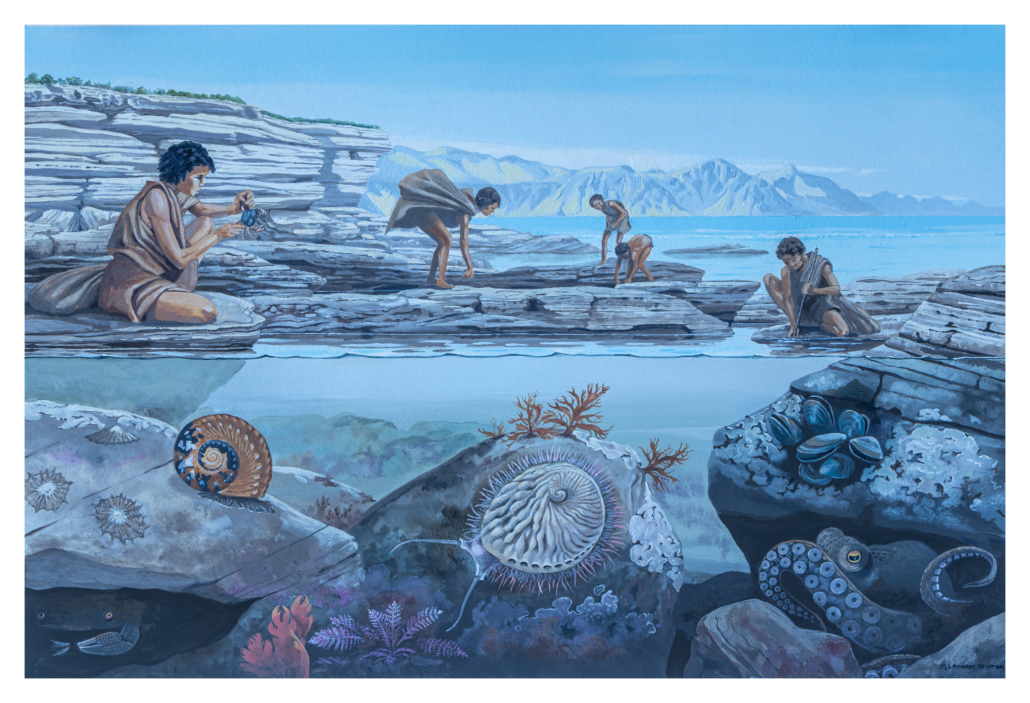
A remarkable role in humanity’s journey across the world.
Most people are familiar with the famous phrase “Out of Africa” — the scientific idea that modern humans originated in Africa before spreading across the rest of the world.
But what if the story were even more specific? What if a key chapter of that journey began along the coast of the Southern Cape — the landscape many of us call home? Recent research explores this possibility. In a review on the “Coastal Hypothesis”, researchers examine evidence suggesting that early modern humans living along this coast may have been among those who migrated out of Africa.
One of the co-authors, Dr Charles Helm, is well known locally as a palaeo-archaeologist, with his work on ancient human footprints attracting international attention.
According to the research, humans along this coastline during the Middle Stone Age developed advanced behaviours. Evidence from sites such as Pinnacle Point, Blombos Cave and the Klasies River caves shows early examples of complex tools, symbolic art and organised food gathering.
Responding to a Very Ancient Instinct
A key ingredient in this story may have been dinner. The coastal environment provided abundant seafood, rich in nutrients believed to support brain development. This may have fuelled a society capable of exploring far beyond its homeland.
The world comes to visit
So perhaps we should not be surprised when the Garden Route welcomes visitors each December and Easter. If the coastal hypothesis holds truth, the crowds may simply be responding to a very ancient instinct. One might say they are not just visiting — they are coming home!
Reference: Whitfield, A., Helm, C., Rust, R., Stear, W., & Thackeray, F. (2025). The Coastal Hypothesis: one possible migration route for Late Pleistocene Homo sapiens from the southern tip of Africa. Transactions of the Royal Society of South Africa, 80(2),133–155.