
THE GREAT DECLUTTER
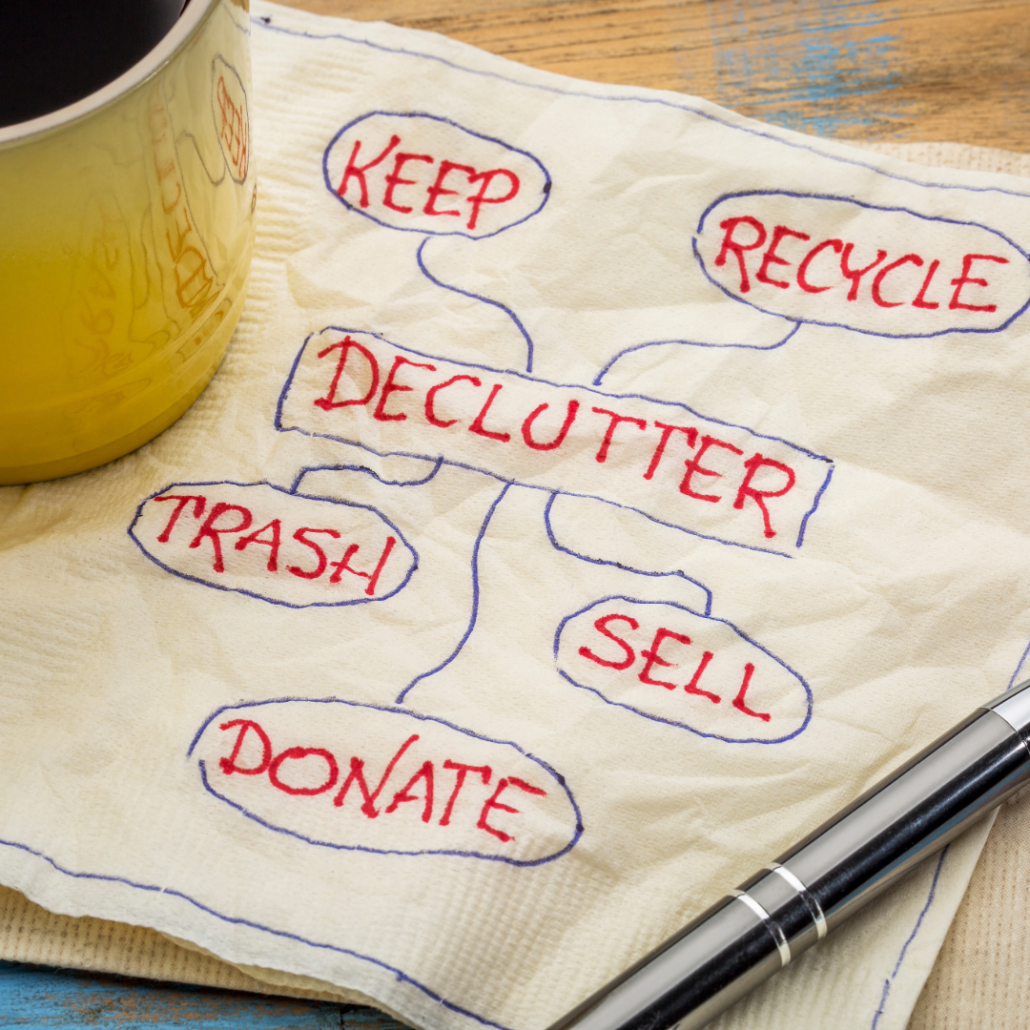
There’s more to clearing out your cupboards than creating extra space – your brain might thank you too.
There is a particular kind of happiness that comes from throwing something away.
Not happiness in the grand, life-changing sense. More the tiny yet deeply satisfying feeling that comes from finally getting rid of the jeans you’ve been keeping since 2014, the drawer full of mysterious cables and chargers or the collection of takeaway menus and tomato sauce sachets you were convinced you’d reuse, somehow.
You know the feeling: you fill a rubbish bag, clear a surface and suddenly have the urge to reorganise your entire life. There’s actually some psychology behind it.
Our brains are constantly processing information from our surroundings. When we’re surrounded by clutter, there are more visual stimuli competing for our attention. This can contribute to feelings of stress and mental overload.
Decluttering reduces some of that visual noise. A clear kitchen counter is still a kitchen counter, but your brain no longer has to register seventeen unrelated objects sitting on it. Fewer things demanding your attention can make a space feel calmer and consequently make us feel calmer too.
There’s also a sense of control. Everyday life is so unpredictable. We can’t control the weather, other people’s behaviour or whether our plans still happen. But we can decide what stays in the bathroom cupboard. Albeit a small sense of control, it’s surprisingly rewarding.
The act of decluttering also gives us an immediate sense of progress. Unlike many adult responsibilities, where the reward for completing something is simply having another thing to do, tidying produces a visual result. The before-and-after is right before your very eyes.
And then there’s all the decision-making: keep it, donate it, recycle it or throw it away. Suddenly you’re the CEO of a small household corporation, making ruthless, executive decisions about a dried-up, limited-edition bottle of nail polish and a myriad of instruction manuals for appliances you no longer have.
Of course, our possessions aren’t always just possessions.
We attach memories, identities and aspirations to things. That dress might remind you of someone from your past. Those books might remind you of the person you wanted to become. That set of resistance bands represents the beginning days of your lockdown fitness journey, which lasted approximately three weeks.
Getting rid of things can therefore be surprisingly difficult. Which is why decluttering doesn’t have to mean becoming a minimalist and throwing away everything you own. It’s about creating a space that works for the life you’re actually living, rather than the life you imagined when you bought that expensive juicer.
And before everything goes into the bin, ask: could somebody else use this? Clothes, books, furniture and household items can be donated rather than discarded, giving them a second life. Materials such as paper, glass and certain packaging or electronics may also have recycling options, depending on where you live.
So, clearing out your home doesn’t have to mean creating a bigger pile of rubbish. Done thoughtfully, it can mean less clutter for you, useful things for someone else and fewer items unnecessarily heading to landfill. And in my opinion, that’s the best part.
You’re left with a little more space, a little less ‘visual noise’ and the oh-so-satisfying feeling that you’ve finally dealt with that cupboard.
Until, of course, you open the next one.
Kelli Romans